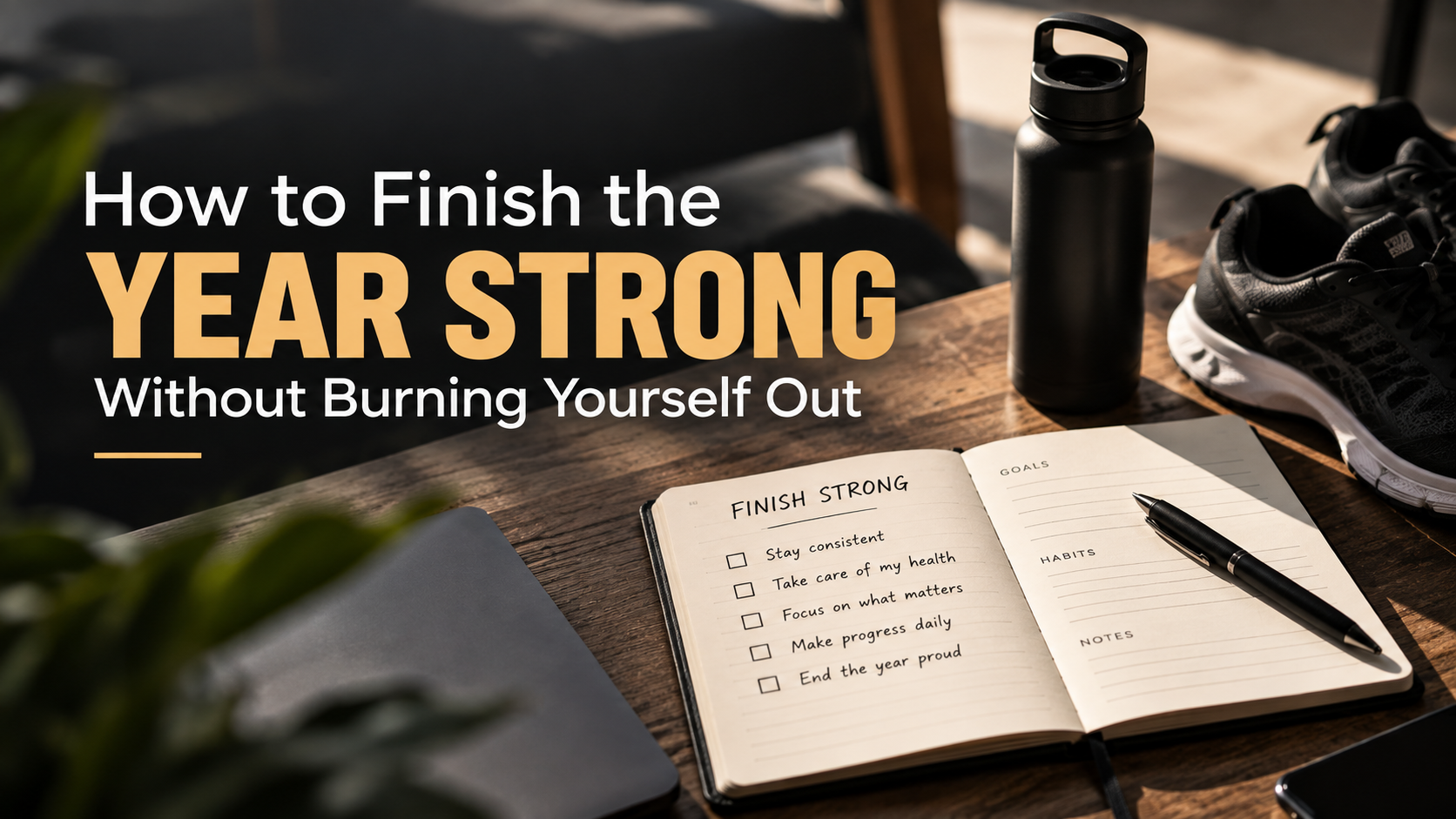
How to Finish the Year Strong Without Burning Yourself Out
October can feel like a turning point.
The year is no longer beginning.
The excitement of January has faded, the goals you set months ago have either moved forward or been forgotten, and suddenly there are only a few months left in the year.
For many people, this creates pressure.
You start looking at everything you haven't accomplished.
The goals you haven't reached.
The projects you haven't finished.
The plans you keep putting off.
And instead of feeling motivated, you may feel overwhelmed.
But October doesn't have to be about rushing to catch up.
It can be an opportunity to pause, evaluate where you are, and decide what deserves your attention for the rest of the year.
Finishing the year strong doesn't mean doing everything.
It means focusing on what matters most and making intentional progress.
1. Look at Where You Are Right Now
Before deciding what you need to accomplish next, take an honest look at where you are.
Think about what has happened since the beginning of the year.
Ask yourself:
What have I accomplished?
What goals have I already made progress toward?
What didn't go according to plan?
What have I learned?
What still matters to me?
It's easy to focus only on what remains unfinished.
But progress isn't always obvious.
You may have developed new skills, built relationships, overcome challenges, or learned what doesn't work.
Those things matter too.
Take a moment to recognize how far you've already come.
2. Stop Trying to Accomplish Everything
One of the biggest mistakes people make in the final months of the year is trying to do too much.
When you realize the year is almost over, you may create a long list of everything you want to accomplish.
Then you try to tackle everything at once.
The result?
More stress, less focus, and unfinished projects.
Instead, choose a few priorities.
Ask yourself:
"If I could accomplish only three important things before the year ends, what would they be?"
Those priorities should receive most of your time and energy.
Focus creates momentum.
3. Revisit the Goals You Set Earlier
Not every goal you created at the beginning of the year is still relevant.
Your circumstances may have changed.
Your priorities may have changed.
You may have discovered that something you once wanted isn't actually what you want anymore.
That's okay.
Review your original goals and divide them into three categories:
Goals that still matter
Goals that need to be adjusted
Goals that no longer make sense
Don't continue pursuing something simply because you wrote it down months ago.
Growth sometimes means changing your direction.
4. Focus on Progress Instead of Perfection
You don't need to completely transform your life before December 31.
Small improvements can create meaningful results.
If you wanted to exercise more, start with a consistent routine.
If you wanted to grow your business, focus on serving your existing customers better or creating a stronger sales process.
If you wanted to learn something new, dedicate a little time each week to developing the skill.
Progress doesn't have to be dramatic to be valuable.
Consistency often matters more than intensity.
5. Finish What You Can
October is also a good time to look at unfinished projects.
Maybe there are emails you've been avoiding.
A project that is almost complete.
A proposal that needs to be submitted.
A conversation you've been meaning to have.
A task you've repeatedly moved to the next week.
Make a list of the things that are close to completion.
Then start finishing them.
Completing unfinished work can create mental space for new opportunities.
Sometimes the best way to move forward is to stop carrying everything from the past with you.
6. Protect Your Energy
Finishing the year strong doesn't mean working every available hour.
Burnout can make it harder to accomplish the things that actually matter.
Pay attention to your energy.
Create boundaries around your work.
Take breaks.
Get enough rest.
Make time for people and activities that help you recharge.
Productivity isn't simply about how much you can do.
It's also about how sustainably you can continue doing it.
A strategy that requires you to constantly exhaust yourself isn't a sustainable strategy.
7. Remove What Is No Longer Serving You
October is a great time for a reset.
Look at your calendar, commitments, routines, and responsibilities.
Ask yourself:
What am I spending too much time on?
What keeps distracting me?
What commitments are no longer necessary?
What habits are holding me back?
What can I simplify?
Sometimes growth comes from adding something new.
Other times, it comes from removing something that no longer belongs.
You don't need to carry every habit, commitment, or expectation into the next year.
8. Create a Simple Plan for the Final Months
Once you've identified your priorities, turn them into a simple plan.
Instead of creating a complicated system, decide what needs to happen each month.
For example:
October: Review, organize, and restart.
November: Build momentum and complete major priorities.
December: Finish, reflect, and prepare for the year ahead.
Break larger goals into smaller actions.
Then put those actions on your calendar.
A goal becomes much easier to accomplish when you know what you need to do next.
9. Don't Compare Your Timeline to Someone Else's
The final months of the year can make comparison especially tempting.
You see someone else's promotion.
Someone launching a business.
Someone traveling.
Someone celebrating a major accomplishment.
It can make you feel like you're behind.
But you're not living their life.
You don't know everything that happened behind their success.
Your timeline will look different.
Instead of asking:
"Why am I not where they are?"
Ask:
"What can I do with where I am right now?"
Your focus should be on your own progress.
10. Start Preparing for the Year Ahead
You don't have to wait until January to start thinking about the future.
October gives you enough distance from the beginning of the year to see what worked and what didn't.
Use that information.
Think about:
What do I want more of next year?
What do I want less of?
What skills do I want to develop?
What relationships do I want to strengthen?
What opportunities do I want to pursue?
What habits do I want to build?
The goal isn't to create a perfect plan.
It's to create a clearer direction.
Finish the Year With Intention
You don't need to accomplish everything before the year ends.
You don't need to make up for every missed opportunity.
And you don't need to rush simply because the calendar is moving forward.
Instead, use October as a reset.
Look at where you are.
Recognize your progress.
Let go of goals that no longer matter.
Choose your priorities.
Finish what you can.
Protect your energy.
And start building a clearer path toward what's next.
There are still months left in the year.
There is still time to make progress.
There is still time to make a change.
And sometimes, finishing the year strong isn't about doing more.
It's about becoming more intentional with what you choose to do.
